
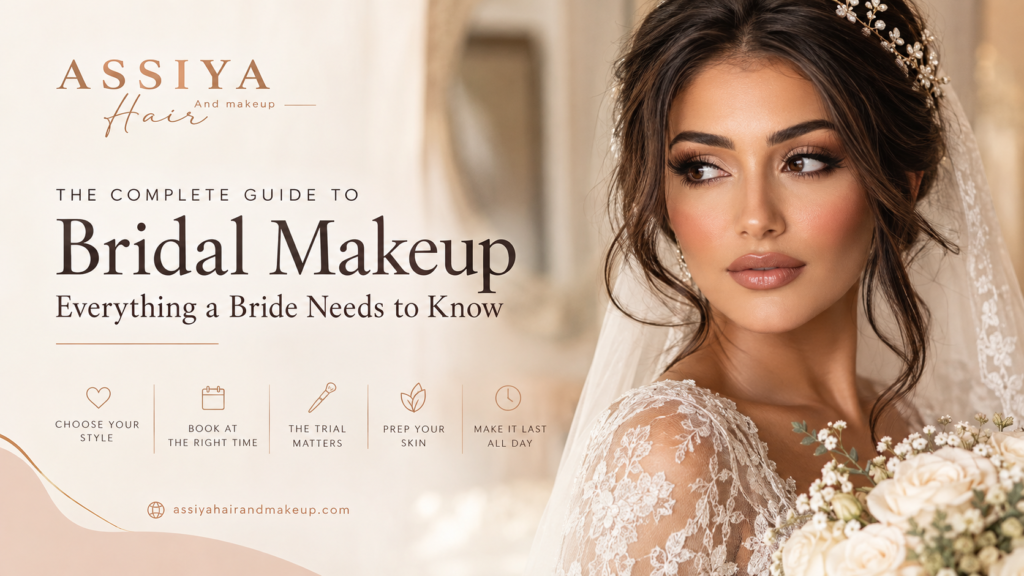
Planning your wedding-day makeup can feel like one more decision on a very long list, but it doesn't need to be complicated. This guide walks you through the whole bridal makeup journey, from picking a style through to the moment you walk down the aisle, so you know exactly what to expect and when to book it.
Whether you're at the very start of planning or already counting down the weeks, this is the bridal makeup guide to bookmark and come back to.
How to Choose Your Bridal Makeup Style
Before you book anyone, it helps to have a rough sense of the look you're drawn to. Most brides land somewhere between two ends of a spectrum:
- Soft, natural glam: skin-focused, low-coverage base, soft brown or rose-toned eyes, a natural flush and a nude-to-soft-pink lip. This reads as "you, but rested and glowing" in photos.
- Full glam: fuller coverage, more defined contour, a stronger eye (think smoky or a subtle cut-crease), and a bolder lip or lash. This holds up better under harsh reception lighting and on camera at a distance.
Your dress, venue and personality all play into this. A boho garden wedding tends to pull brides toward the softer end; a formal ballroom or evening reception often calls for a touch more definition so your features don't get lost under bright uplighting. There's no single "correct" answer; the goal is a look that still feels like you when you see the photos in ten years, not a trend that felt right for a season.
If you're torn between the two, it's worth reading up on soft glam versus full glam in more depth before your trial. As a starting point, bring a handful of reference photos (not twenty) that capture the feeling you want, not just individual products.
When to Book Your Bridal Makeup Artist
Sydney's wedding calendar has genuine peak periods: spring and early autumn weekends fill first, and Saturdays go before any other day. As a general rule:
- Book 6–12 months out if your wedding falls in peak season (September–November or March–May) or on a Saturday.
- Book 3–6 months out for off-peak dates, weekday weddings, or if you're flexible on timing.
- A deposit is what actually secures your date; an enquiry alone doesn't hold it.
If you're already inside the 3-month mark, don't panic, reach out anyway. Cancellations happen, and some artists (including our studio) keep limited flexibility for last-minute dates.
The Bridal Trial: What It Is and Why It Matters
A trial is a full run-through of your wedding-day look, done ahead of time, usually four to eight weeks before the wedding, once your hair is at the length and colour you'll be wearing it in, and ideally close to when your spray tan (if you're getting one) will match your skin on the day.
At a trial, you should:
- Bring photos of your dress, veil, and any hair accessories.
- Bring a small, focused set of inspiration images: quality over quantity.
- Wear a white or light top so you can see how the makeup sits against your actual skin tone, not a dark top that skews the read.
- Take photos in natural daylight and under warm indoor light, since your reception will likely be one or the other (or both).
Treat the trial as a working session, not a final exam. It's completely normal to adjust the lip colour, soften the eye, or ask for more coverage after seeing it in photos; that's exactly what the trial is for.
Prepping Your Skin Before the Big Day
Makeup only looks as good as the skin underneath it, and skin prep is where most of the "how did she look so fresh at 11pm" magic actually happens. In the weeks leading up to the wedding:
- 6–8 weeks out: if you're planning any facials, chemical peels, or new skincare actives, start (and finish) trialling them now. Never introduce something new in the final two weeks.
- 1–2 weeks out: stick to a simple, consistent routine. This isn't the time to test a new serum.
- Night before: hydrate well and get to bed at a reasonable hour. No product replaces sleep.
- Morning of: a light, non-greasy moisturiser is usually all your artist needs to work with. Anything heavier can affect how long your base lasts.
If you know you run oily through the T-zone or dry through the cheeks, mention it when you book, since it changes the products and techniques used on the day.
The Wedding-Morning Run-Sheet
A calm morning starts with a realistic schedule. As a rough guide for timing (exact times vary by artist and party size; see the wedding morning timeline for a full breakdown):
- Hair and makeup starts with whoever needs the most time or is leaving earliest (often the bride's mum, or bridesmaids in an early photo call).
- The bride is usually done last or second-to-last, so the look is as fresh as possible for the ceremony.
- Build in a buffer: 15–20 minutes per person beyond the "ideal" time, because mornings always run a little long.
- Photos start once hair and makeup wraps for the group being photographed. Confirm this order with your photographer in advance.
Sharing this run-sheet with your bridal party, photographer and venue coordinator ahead of time avoids the most common wedding-morning stress: everyone assumes someone else has the timing sorted.
Making Your Makeup Last All Day (and Night)
Sydney weddings come with a genuine longevity challenge: humidity in the warmer months, long ceremonies outdoors, and a reception that runs until midnight. A few things make the biggest difference:
- Primer suited to your skin type, applied properly rather than skipped to save time.
- Setting powder in the right zones, not a blanket layer, which can look cakey by evening.
- A setting spray built for longevity, not just a finishing mist.
- A small touch-up kit for you (or a bridesmaid) to manage: blotting papers, a travel-size setting powder, and your lip colour are usually enough.
If tears are on the cards, and at most weddings, they are, ask your artist about waterproof mascara and liner specifically, and a base that's been sealed rather than left to sit on the surface of the skin.
Styling the Whole Bridal Party
Most bridal makeup artists offer packages for the full party, not just the bride: bridesmaids, the mother of the bride, and flower girls included. A few things worth knowing:
- The bride is typically given the most detailed, personalised look; the bridal party's looks are often more streamlined so the timeline stays on track.
- It's completely fine, and usually more flattering, for bridesmaids to have looks tailored to their own skin tone and features rather than an identical, one-size-fits-all face.
- Group bookings are usually priced with tiers (bride, bridesmaid, junior bridesmaid, flower girl), and locking these in early secures the whole party for one continuous morning rather than staggered appointments.
How Much Does Bridal Makeup Actually Cost?
Pricing varies depending on experience, travel, and what's included, but here's a realistic starting point for the Sydney market:
| Service | Typical Starting Price |
|---|---|
| Bridal makeup (bride) | From $250 |
| Bridal trial | Often priced separately, similar to a single session |
| Bridal party members | Lower per-person rate, tiered by role |
| Early start (before ~6am) | Additional fee |
| Travel outside metro Sydney | Additional fee |
A few honest pointers on pricing: a quote significantly below the market for a full bridal look is worth questioning, since it often means limited experience, a rushed schedule, or lower-quality products. Ask what's actually included (trial, touch-ups, travel) before comparing two quotes side by side, since "cheaper" often isn't cheaper once the extras are added back in. For a full cost breakdown, see how much bridal makeup costs in Australia.
Bringing It All Together
Bridal makeup isn't just about the two hours before the ceremony. It's a process that starts months out with the right booking, gets refined at the trial, and comes together on the morning with a realistic schedule and the right products for your skin and your day. Get those pieces right, and the makeup itself becomes the easy part.
If you're ready to start the conversation, you can find full details on our bridal makeup services page, browse real client looks in the gallery, or get in touch to check availability for your date.
Frequently Asked Questions
Do I need a trial before my wedding day?
It's strongly recommended, especially for a first-time bride. A trial lets you see the look in photos, adjust anything that doesn't feel right, and walk into your wedding morning with zero surprises.
Can my bridesmaids and I get ready together?
Yes, most bridal bookings are built around the whole party getting ready in one place, one morning, on a single coordinated schedule.
What if it's humid or my wedding is outdoors?
This is exactly what a longevity-focused product routine and setting spray are for. Mention your venue and season when you book so your artist can plan for it, rather than trying to fix it on the day.
How far in advance should I lock in my date?
For a Saturday wedding in peak season, 6–12 months out is ideal. For weekday or off-peak weddings, 3–6 months is usually enough, but earlier is always safer than later.