
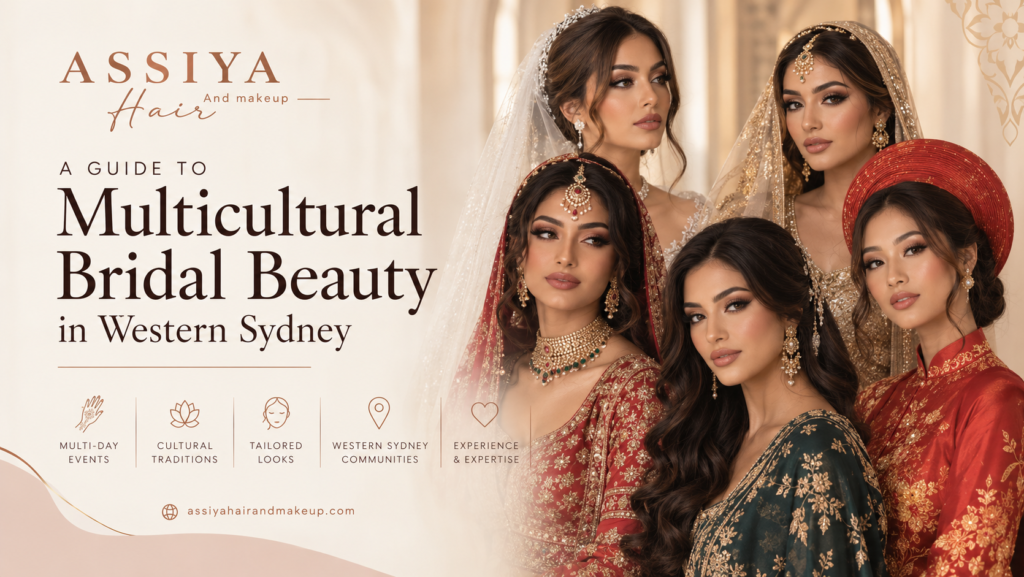
Western Sydney is one of the most culturally diverse bridal markets in the country, and that diversity brings real complexity to wedding beauty. A bride from a Lebanese background, a Pakistani background, or a Vietnamese background isn’t looking for the same look, the same timeline, or the same event structure, and a good artist needs to understand all of it, not apply one formula to everyone.
This guide is an overview of the traditions we work within most often across Merrylands, Granville, Fairfield and Parramatta, what each bridal look typically involves, and why booking a locally based, culturally fluent artist genuinely changes the outcome for multicultural weddings.
Why Multicultural Bridal Makeup Is Its Own Skill
Multicultural bridal makeup sydney work asks for more than technical skill with a brush. It asks for an understanding of:
- Multi-day event structures, where the bride needs several distinct looks across a single week, not one look for one day.
- Deeper, richer colour palettes and heavier definition that many South Asian, Middle Eastern and Assyrian looks call for, which behave differently to a soft Western bridal palette.
- Photography and video conventions specific to these communities, where looks are often built to hold up under continuous filming and close-up video, not just still photography.
- Family and cultural expectations around modesty, colour symbolism, and the order in which events happen, which shape what’s appropriate for each specific day.
An artist without this context can produce a technically fine look that still feels slightly off to the bride and her family, because it wasn’t built around the actual event.
An Overview of the Traditions We Work Within
Lebanese and Arabic Weddings
Lebanese and Arabic weddings are often structured around a henna night, an engagement celebration, and the wedding itself, each with a distinct look. Henna night makeup tends to be bold and celebratory, often built around gold and warm tones that photograph beautifully against traditional dress. The wedding-day look is usually the most refined and long-wearing of the three, since the day often runs from an afternoon zaffe (wedding procession) through to a late reception.
Indian and Pakistani Weddings
Indian and Pakistani weddings frequently span several days, including a mehndi (henna) function, a sangeet or engagement event, and the wedding or walima itself. Each event has its own colour story and intensity: mehndi looks are often brighter and more playful, while the wedding-day look, particularly for a red or heavily embellished outfit, needs a stronger, more structured base to hold up against rich fabric and jewellery. Getting the eye makeup right for these looks, especially for hooded or deep-set eyes, is one of the most requested skills in this category.
Afghan Weddings
Afghan weddings share some structural similarities with other South and Central Asian celebrations, often including an engagement event and a wedding that can run long into the night. Bridal looks here tend to favour strong, defined eyes and a polished, camera-ready finish, since these events are heavily photographed and filmed throughout the evening.
Assyrian Weddings
Assyrian weddings, well represented in Western Sydney’s Fairfield area, typically combine church traditions with a lively, extended reception. Bridal makeup for these events tends toward a classic, elegant full-glam look that holds through hours of dancing, with particular attention paid to longevity given how long these celebrations often run.
Turkish Weddings
Turkish weddings often include a henna night (kına gecesi) as a distinct event from the wedding itself, with its own colour palette and styling. The wedding-day look is generally more refined, and as with several of the traditions above, needs to be built to last through a long, celebration-heavy reception.
Vietnamese Weddings
Vietnamese weddings frequently include a traditional tea ceremony, where the bride often wears an áo dài, alongside a Western-style reception look later in the day. This means many Vietnamese brides need two distinct makeup looks, a more traditional, softer look for the tea ceremony and a fuller reception look, sometimes with an outfit change to match.
The Multi-Day Event Structure, Explained
One of the biggest differences between a Western bridal booking and many multicultural bookings is that the “wedding” isn’t a single day. It’s common to need:
- A pre-wedding event look (henna, mehndi, or an engagement function), often bright and celebratory.
- A ceremony look (church, mosque, temple, or civil ceremony), which is often more modest and structured.
- A reception look, which is typically the most glamorous and long-wearing of the set.
Booking all of these with the same artist matters more than it might seem. It means consistent quality across the week, one person who already understands your skin, your preferences and your family’s expectations, and no risk of a mismatched look between events that will all end up in the same photo album.
Why a Locally Fluent Artist Matters
Booking an artist who genuinely understands your community’s traditions, rather than one who is learning them for the first time on your wedding day, makes a real difference:
- Fewer surprises on the day. An artist familiar with your tradition already knows the rough order of events, what each look needs to achieve, and how long each stage takes.
- Better colour and product choices for the occasion. Deeper, richer palettes and heavier definition require different technique than a soft, natural Western bridal look, and an artist experienced across skin tones and cultural styles will get this right the first time.
- Respect for family and religious considerations. Modesty requirements, headscarves, and specific colour symbolism (which colours are auspicious, which are avoided) vary by tradition, and a locally experienced artist won’t need this explained from scratch.
- A trial that actually reflects the day. A trial for a multi-event wedding should cover the specific look you’re most unsure about, not a generic “bridal” look that doesn’t map to any of your actual events.
Our studio, based in Guildford West and working across Merrylands, Granville, Fairfield and Parramatta, has built experience across many of these traditions specifically because they make up so much of Western Sydney’s bridal community. If your wedding includes events not covered above, it’s worth asking directly rather than assuming a general bridal booking will cover it. [ASSIYA INPUT NEEDED: confirm the full list of specific communities/traditions Assiya has direct experience with, and any specific examples (without naming clients) she’d be comfortable sharing to make this section more concrete and credible.]
Bringing It All Together
Multicultural bridal beauty in Western Sydney isn’t a single service, it’s a set of related skills across colour, longevity, cultural context and event structure, built up through genuine experience with the communities being served. Whatever tradition your wedding follows, the goal is the same: a look, or a set of looks, that feels authentically yours and holds up through every event on the calendar.
If you’re planning a multi-day wedding, take a look at our bridal makeup services for full details, or get in touch to talk through your specific events and traditions before booking.
Frequently Asked Questions
Do I need a different makeup look for each wedding event?
Usually, yes. A henna or mehndi look is typically brighter and more playful, while the ceremony and reception looks tend to be more refined and built for longevity. Discuss all your events at booking so each look can be planned properly.
Can one artist do my henna, ceremony and reception looks?
Yes, and it’s generally the better option. Booking one artist for the whole week means consistent quality and one person who already understands your skin, preferences and family expectations across every event.
How do I know if an artist understands my specific tradition?
Ask directly about their experience with your community’s weddings, and ask to see real examples in their portfolio if possible. A good artist will be upfront about what they’ve worked on before.
How far in advance should I book for a multi-day wedding?
The same general rule applies as for any bridal booking: 6-12 months out for peak season, and as early as possible for weddings involving multiple events, since these require more of the artist’s time across the week.