
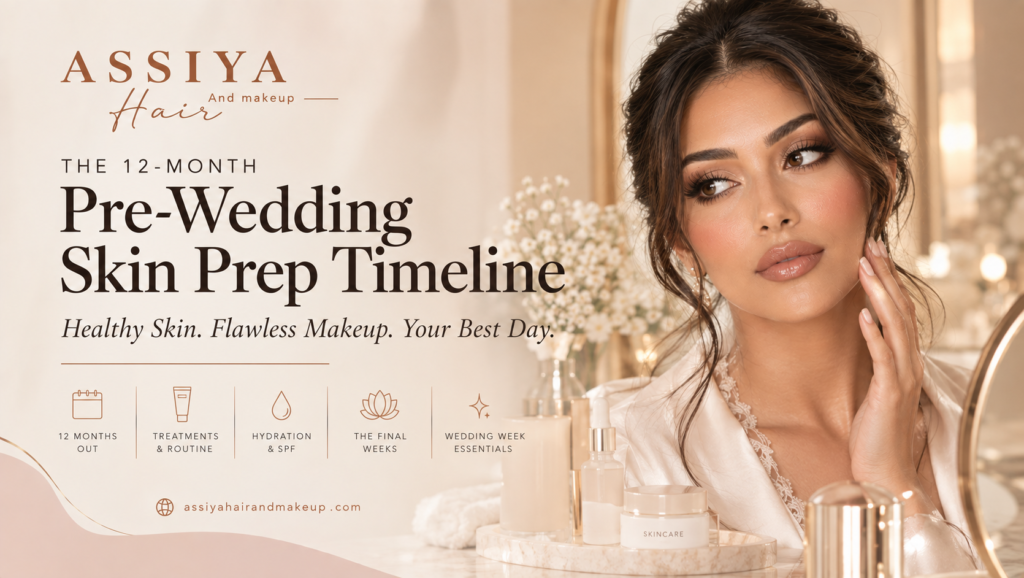
Great wedding-day makeup starts long before anyone picks up a foundation brush. Pre wedding skincare is really about giving your artist the best possible canvas to work with, and that comes down to timing, not intensity. This bridal skin prep timeline walks through what to focus on each month, from a full year out to the morning of, so nothing gets rushed and nothing backfires close to the date.
If you’re starting this later than twelve months out, don’t worry: every stage below still helps, just compress the earlier steps into whatever time you actually have.
Why Timing Matters More Than Intensity
It’s tempting to think that more treatments, done more aggressively, closer to the wedding will guarantee the best skin on the day. In practice, the opposite is usually true. Skin needs time to recover from stronger treatments, and any reaction, redness or breakout risk is something you want resolved months before your wedding, not discovered a week out. The goal of this timeline is to front-load anything with a recovery period and taper down to gentle, low-risk maintenance as the date approaches.
12 to 9 Months Out: Build the Foundation
This is the stage for bigger-picture decisions and any treatments with real downtime or a longer results timeline.
- Book a skin consultation if you haven’t had one recently, ideally with a dermatologist or experienced skin therapist, to identify your actual skin concerns rather than guessing.
- Start (and give time to work) any longer-term treatments, such as a course of facials targeting pigmentation, texture or acne scarring, since these typically need several sessions spaced weeks apart to show results.
- Establish a consistent basic routine if you don’t already have one: cleanse, moisturise, and daily SPF, non-negotiable given Sydney’s UV levels.
- Address any medical skin concerns with a professional well before making cosmetic decisions, since some treatments aren’t suitable to combine or need medical clearance first.
9 to 6 Months Out: Address Specific Concerns
With the foundation in place, this window is for treating anything specific you’d like improved before the wedding.
- Continue any facial series you started in the previous phase, maintaining consistent spacing between sessions.
- Consider treatments for pigmentation, texture or fine lines if these are genuine concerns, always through a qualified professional and always with enough runway to assess results and manage any downtime.
- Patch test anything new well ahead of committing to it as part of your routine, since a reaction now is far easier to manage than one closer to the date.
- Keep hydration and sun protection consistent, since these support whatever active treatment work is happening elsewhere.
6 to 3 Months Out: Refine and Maintain
By this stage, most of the heavier lifting should be done, and the focus shifts to refining your routine and locking in what’s working.
- Finalise your regular skincare routine and stop introducing genuinely new products or actives from this point, aside from anything your skin professional specifically recommends.
- Book your bridal makeup trial within this window if you haven’t already; it’s a useful checkpoint to see how your skin and current routine are reading under makeup ahead of the day.
- Continue any maintenance facials on a spaced, consistent schedule rather than increasing frequency to compensate for lost time.
- Address any late-emerging concerns early, rather than waiting, since the closer you get to the wedding, the fewer safe options remain for anything with downtime.
3 to 1 Month Out: Lock In the Routine
This is where the golden rule of pre-wedding skincare really matters: nothing new.
- Do not introduce new products, active ingredients, or treatments in this window, even ones that worked well for a friend or came highly recommended. Skin can react unpredictably to something new, and there’s no longer enough runway to recover if it does.
- Stick to gentle, hydrating maintenance: consistent cleansing, moisturising and SPF, plus whatever treatments you’re already used to and know your skin tolerates well.
- Prioritise sleep and hydration over any product change, since both have a genuine, visible effect on skin the products alone can’t replicate.
- If you’re getting a spray tan, do a test session now if you haven’t already, so there’s time to adjust the shade or technique before the real one.
The Final Two Weeks: Protect, Don’t Experiment
The closer you get, the more the priority shifts from “improving” skin to simply protecting what you’ve already built.
- No facials, peels or extractions in the final two weeks, since even a gentle treatment can leave temporary redness, sensitivity or breakouts that weren’t there before.
- Avoid trying a “just in case” new product, even something as simple as a new moisturiser, since your skin’s current routine is the known quantity.
- Manage stress and sleep as genuine skincare priorities, not separate from it; both show up on skin more visibly than most people expect this close to a big event.
- Stay consistent with hydration, particularly if Sydney is running warm or humid, since dehydrated skin behaves very differently under makeup to well-hydrated skin.
Wedding-Week Essentials
In the final few days, the focus narrows to a short, low-risk checklist.
| Timing | Focus |
| 5-7 days before | Final spray tan (if getting one), light exfoliation only if this is already part of your normal routine |
| 2-3 days before | Hydration, sleep, no new products of any kind |
| Night before | Simple, familiar routine; early night |
| Morning of | Light, non-greasy moisturiser only, leaving skin ready for your artist to work with |
[ASSIYA INPUT NEEDED: confirm any specific skin-prep product or technique Assiya asks brides to use (or avoid) on the morning of the wedding, to replace the general “light, non-greasy moisturiser” guidance with a real, specific detail.]
A Note on Professional Treatments
Anything beyond basic skincare, facials with active ingredients, peels, injectables, or laser treatments, should always be discussed with a qualified dermatologist or cosmetic professional, who can advise on suitability, timing and realistic recovery windows for your individual skin. This timeline is a general guide to sequencing, not a substitute for that professional advice, and any treatment decisions should be made with a suitably qualified provider.
Bringing It All Together
The best pre-wedding skin prep isn’t about doing more, it’s about doing things in the right order and knowing when to stop introducing anything new. Front-load bigger decisions and treatments with downtime, taper into gentle maintenance as the date approaches, and protect what you’ve built in the final weeks rather than experimenting with it. Skin that’s calm, hydrated and familiar with its own routine is always the best canvas for your artist to work with.
When you’re ready to book your bridal makeup, our bridal makeup services page has full details, or you can get in touch to talk through your timeline and trial date.
Frequently Asked Questions
When should I get my last facial before the wedding?
Generally no later than two weeks out, and ideally further back than that if the facial involves any exfoliation, extractions or active ingredients that could cause temporary redness or sensitivity.
Is it too late to start skin prep if my wedding is only a few months away?
No. Every stage in this timeline still helps; you’ll simply need to compress the earlier phases and be more conservative about introducing anything with downtime this close to the date.
Can I try a new skincare product right before my trial?
It’s best avoided. Your trial should reflect your skin as it will actually be on the wedding day, so testing new products beforehand, well before the trial, gives a truer picture.
Does humidity affect how my skin prep holds up under makeup?
Yes. Well-hydrated skin generally holds makeup better through a warm or humid Sydney day than dehydrated skin, which is part of why consistent hydration matters more than any single product in the final weeks.